Filtering Prospects by Machining Operation, Surface Treatment, or Fluid System Instead of Company Name
Plant-level equipment and permit data shows which accounts need your product.
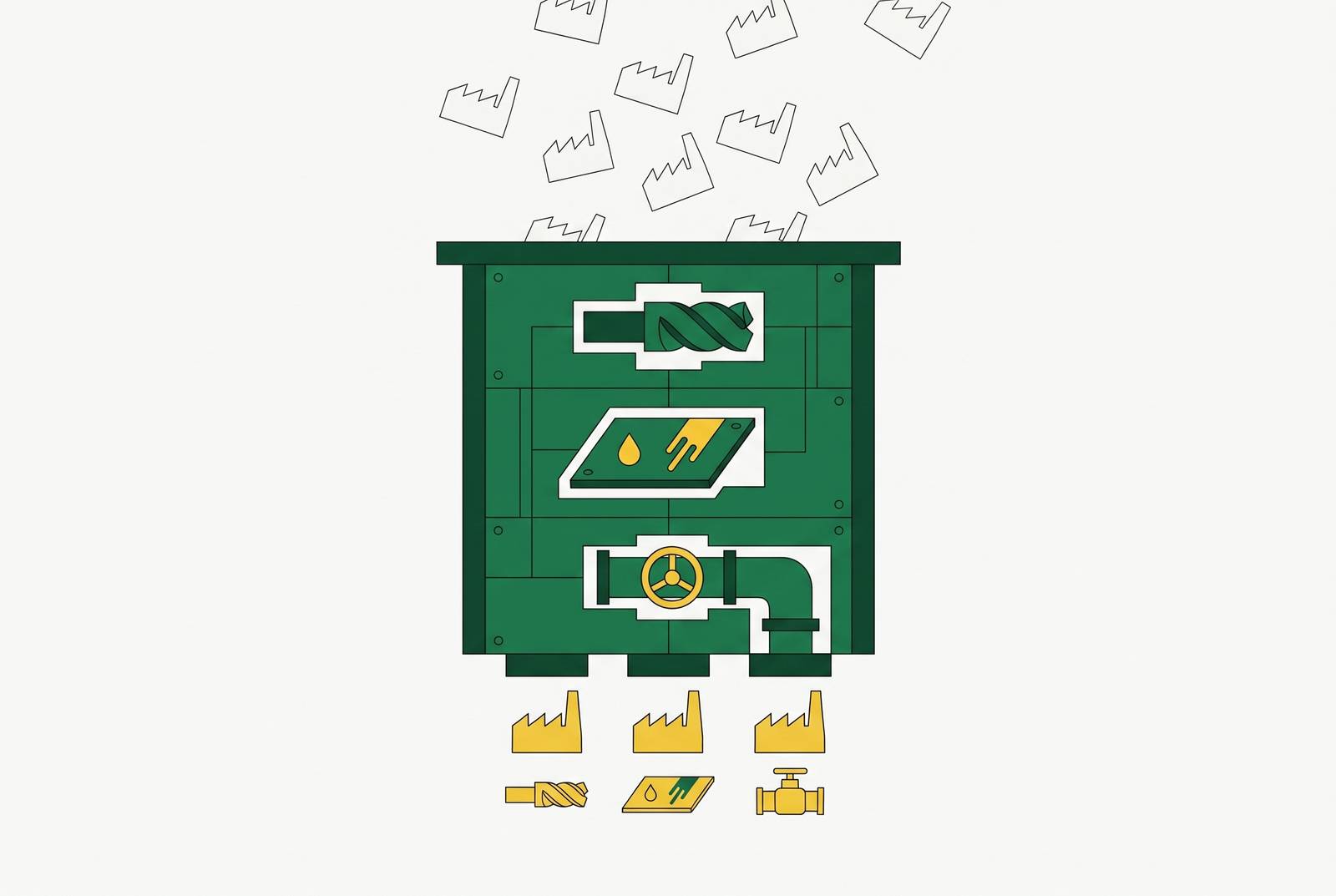
For specialty chemical and metalworking fluid prospecting, the right starting point is plant-level process data, followed by contact enrichment. Equipment and permit records identify the operations that require a product, while company names and industry codes identify only broad categories of possible buyers. Filtering by machining operation, surface treatment, or fluid system gives reps a defensible basis for choosing both the account and the opening conversation.
Why company-name and industry-code lists fail metalworking fluid and surface-treatment sellers
A company list identifies organizations. A stamping shop running aqueous wash lines after forming has a different purchase mandate from a CNC machining center running high-pressure through-spindle coolant on titanium. Yet both can have the same NAICS code. Neither the company name nor its size resolves that difference. The rep still needs more information to choose the right fluid, cleaning chemistry, or treatment product.
Even when the codes are correct, classification systems leave this gap. SIC, last officially revised in 1987, groups plants by the main end product they make. NAICS groups them by production process, but its categories remain too broad to distinguish a phosphating line from an e-coat line within the same industry group. SIC 34, Fabricated Metal Products, Except Machinery and Transportation Equipment, is one such broad group. A sheet-metal enclosure shop and a precision valve manufacturer can fall in that group even though they need very different fluids and surface treatments.
Keyword searches widen the ambiguity. “Manufacturing” can describe a boutique furniture maker, a contract electronics assembler, a chemical plant, or a heavy machinery OEM. Those businesses have different needs, decision-makers, and procurement cycles, so their inclusion in one list establishes little about product fit. The missing fact is the operation on the floor.
What the process actually determines — how machining operations, surface treatments, and fluid systems lock in product requirements
Machining operations impose requirements that cannot be substituted without process or quality consequences. High-speed aluminum milling calls for different coolant chemistry from hard-turning steel or grinding ceramics. The operation constrains the base fluid type, lubricity package, and biocide tolerance. Delivery equipment adds another set of limits. Through-spindle high-pressure systems have requirements for particulate and foam, while a shop machining steel and aluminum in the same sump needs chemistry that works with both metals.
Surface treatment creates similarly specific purchase requirements. A plant either runs a phosphating step or it does not. Zinc or iron phosphating requires phosphoric acid chemistry, accelerators, and a rinse sequence, while electroless nickel plating requires a different chemical system. A plant that runs e-coat primer after phosphating needs to buy cleaner, conditioner, phosphate, and e-coat resin for the steps in that sequence.
Fluid systems also define the form of the opportunity. A central delivery system serving dozens of machines presents a managed-fluids opportunity, while a sump-by-sump shop presents a drum-and-pail opportunity. Sump management, tramp-oil removal, and recycling equipment show which services a plant needs as well as the chemistry. Equipment and permit records make these operational facts verifiable before contact, although the presence of a process does not by itself establish that a supplier change is imminent.
How can reps build prospect lists by machining operation, surface treatment, or fluid system?
Start with the operation a product serves. Compare “plants running aqueous alkaline cleaning before phosphating,” a useful filter, with “metal fabricators. The first describes a plant-level fact that can be investigated. The second describes a category. Working backward from chemistry follows the same logic: a semi-synthetic cutting fluid with high lubricity points to heavy-duty turning or broaching on ferrous metals.
Equipment records then make the filter executable. CNC machining centers, broaching machines, wash stations, phosphating tanks, anodizing baths, and e-coat lines appear in permit applications, equipment financing filings, and facility inspection records. Equipment type narrows the search to process users, after which geography and plant size refine the list. Permit data adds evidence of regulated steps. A VOC coating permit identifies finishing activity, while a water discharge permit tied to metal finishing supports identification of a wet-process treatment operation.
Fit and timing are separate ranking criteria. A plant running the target operation has a product need, but a new-line building permit or process-engineering hiring creates a more immediate reason to investigate. The work therefore starts with an industrial directory to find plants, then uses plant-level records to check their processes and contact enrichment to find a way into the account. Contact data comes after the technical filter. Otherwise, enrichment makes an imprecise list easier to call without making it more relevant.
SUPPLYCO AI is one tool that tracks industrial buying signals. Launched in February 2026, it tracks 15+ data sources with models trained on manufacturing terminology and industrial buying signals. Its inputs include expansions, RFQs, workforce changes, facility investments, UCC filings, and government awards. The distinction for a chemicals seller is whether a signal establishes process fit, purchase timing, or both. Expansion intelligence is useful, but it does not replace evidence that the plant runs the operation a particular formulation serves.
What process-first filtering changes about the opening conversation
Instead of asking broadly what a plant buys, the rep can discuss the product category required by a known operation. That is a different basis for contact. A conversation about zinc phosphating ahead of e-coat starts with a shared technical subject rather than an attempt to discover whether any relevant need exists. The rep can then address the actual treatment sequence.
Industrial buying committees span engineering, operations, quality, procurement, and finance, but those functions do not hold interchangeable information. For a specific surface-treatment step, the process engineer or plant chemist is the relevant technical entry point. A call routed only to purchasing can miss that expertise.
Equipment data can help a rep talk about machine type or fluid delivery configuration, while permit data can show a finishing constraint that matters to the plant. Those facts do not establish the plant’s current formulation, satisfaction with its supplier, or willingness to run a trial. They establish a reason for a technical conversation. The process data enables the rep to open with what the plant actually runs, rather than a cold pitch that asks the prospect to supply all the context.
How process-level account knowledge surfaces cross-sell inside existing accounts
An existing customer can be well known commercially and poorly mapped operationally. Its CRM record shows the products already supplied, leaving gaps in its coverage of the processes that create demand inside the plant. A coatings customer buying a particular resin may also run phosphating pretreatment supplied by a competitor. Equipment and permit records can show that the customer also needs phosphating pretreatment.
Changes within the plant widen this gap. A metalworking fluid customer may add a grinding cell or hard-turning operation that needs a different formulation from the one already purchased. Permit and hiring signals can reveal the addition before the next scheduled visit. A new surface-treatment line is especially actionable because it combines a known buyer with new demand. Mapping these changes into the account record gives the rep a reason to discuss an additional product.
BCG’s March 2026 Executive Perspectives report, “AI as the new performance divide,” documents a global B2B specialty chemical distributor using AI to generate customer-specific cross-selling leads. The report also describes an early-warning model that helped reduce churn and down selling. The report does not show that customer process profiles led to those results. Intelligence about each account can help with sales work beyond winning new customers.
Existing accounts usually buy far more from competitors than from the supplier whose CRM contains their name. The untapped demand is therefore not limited to another order for the same product. It includes processes that the rep has never served. For most fluid and surface-treatment sellers, that cross-sell opportunity is likely larger than new-logo prospecting.
Why specialty chemical and fluid distributors face the greatest risk from process-blind prospecting
Broadline distributors are particularly exposed when product breadth substitutes for technical understanding. A large portfolio does not establish which product belongs in a plant’s wash line, machining sump, or treatment sequence. Specialists can make that connection more directly. As manufacturers favor partners with technical skills, a distributor that cannot explain process fit has less to offer to keep the relationship.
L.E.K.’s 2026 specialty chemicals analysis finds that manufacturers show a stronger preference for end-market-specific distributors and regional partners, with less emphasis on broadline distributors. The analysis finds that manufacturers value technical knowledge, formulation support, and local insight in their relationships with distributors. That preference raises the standard for prospecting as well as account service. Process intelligence is becoming a baseline capability. It is not merely a refinement reserved for large commercial teams.
Specialty formulators face the same problem through a narrower portfolio. A phosphating chemistry supplier, a semi-synthetic cutting fluid house, or an anodizing additive producer can only offer a product that fits if the plant runs the required process. Calls to non-users take up time without giving the rep a relevant technical need to discuss. Process-first filtering removes that class of false positive. It does not establish that every remaining plant is ready to buy.
Harbour Group announced in November 2025 that Americo Chemical had acquired Fusion Chemical, a manufacturer of specialty metalworking fluids. Such transactions can restructure supplier relationships and create opportunities for competitive displacement. They do not establish that any particular customer will switch. A distributor needs to know which plants were served and what those plants run before treating the transaction as an actionable sales signal.
Putting a process-first prospect list into practice — a starting framework for reps and sales leaders
For reps and sales leaders putting this approach into practice, the first task is to write a one-sentence process statement for each major product line. Examples include “plants running wet grinding on hardened steel” and “plants operating zinc phosphating ahead of powder coat.” A fluid-system statement might name central coolant systems that serve more than ten machining centers. That statement becomes the primary filter. Industry and geography can refine the search without standing in for the process requirement.
The next task is to source evidence at plant level. Equipment records, permit filings, inspection data, and hiring patterns are public but scattered, so aggregation is a practical part of the workflow. Ranking then combines process fit, open volume, and a reason to act now. A recent expansion or new-line permit gives the rep a more specific opening than an unchanged account description. The resulting signal should promptly enter the CRM as an event tied to the account.
Corvus is one option among plant-level intelligence platforms for this workflow, profiling a broad range of manufacturing plants by their equipment and permits so a rep can filter for an “aqueous wash line plus VOC coating permit”. It integrates with CRMs, allowing the resulting list to sit beside existing accounts.
A team ready to operationalize the approach can use a demo to assess whether its own process statements become usable plant filters and account events. The rep should be able to identify the relevant operation, understand the evidence behind it, and select the product category to discuss. That preparation turns the opening conversation toward what the plant runs and what its process requires.