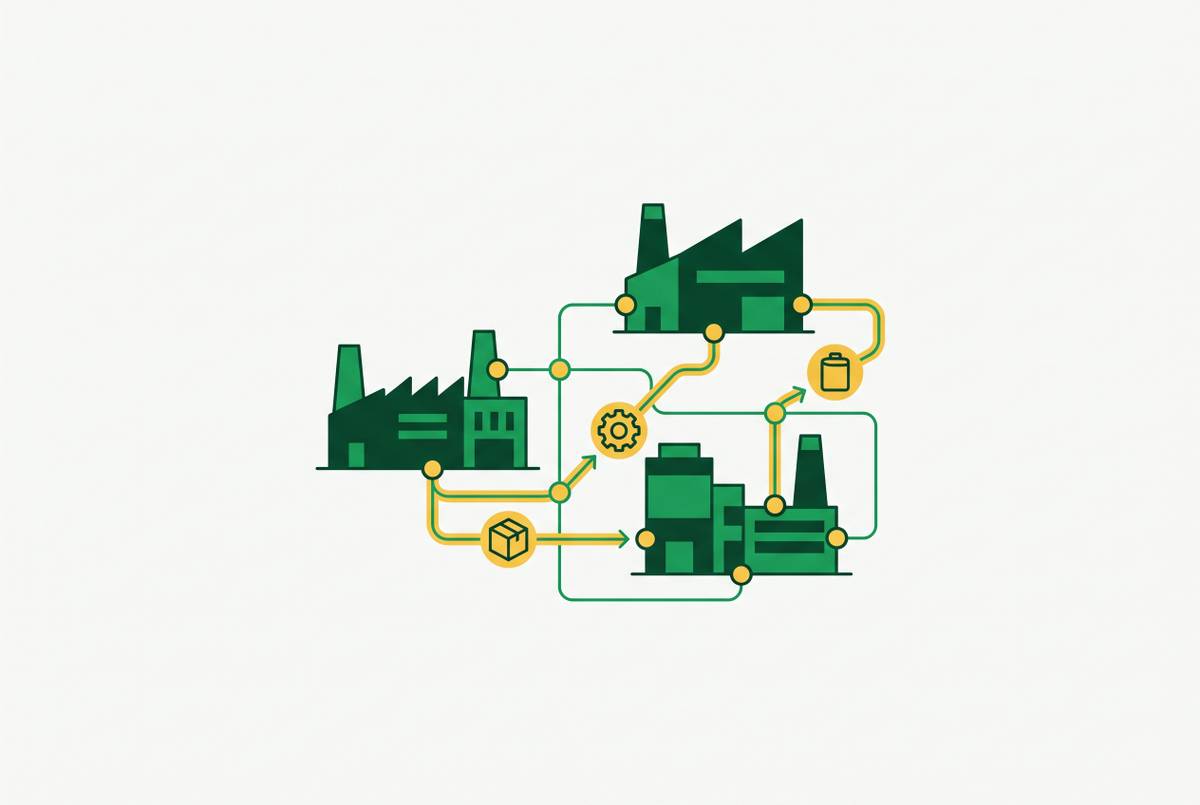
Defending Incumbent Supplier Status in Manufacturing Accounts
Incumbents lose accounts through passive neglect, not active competition.
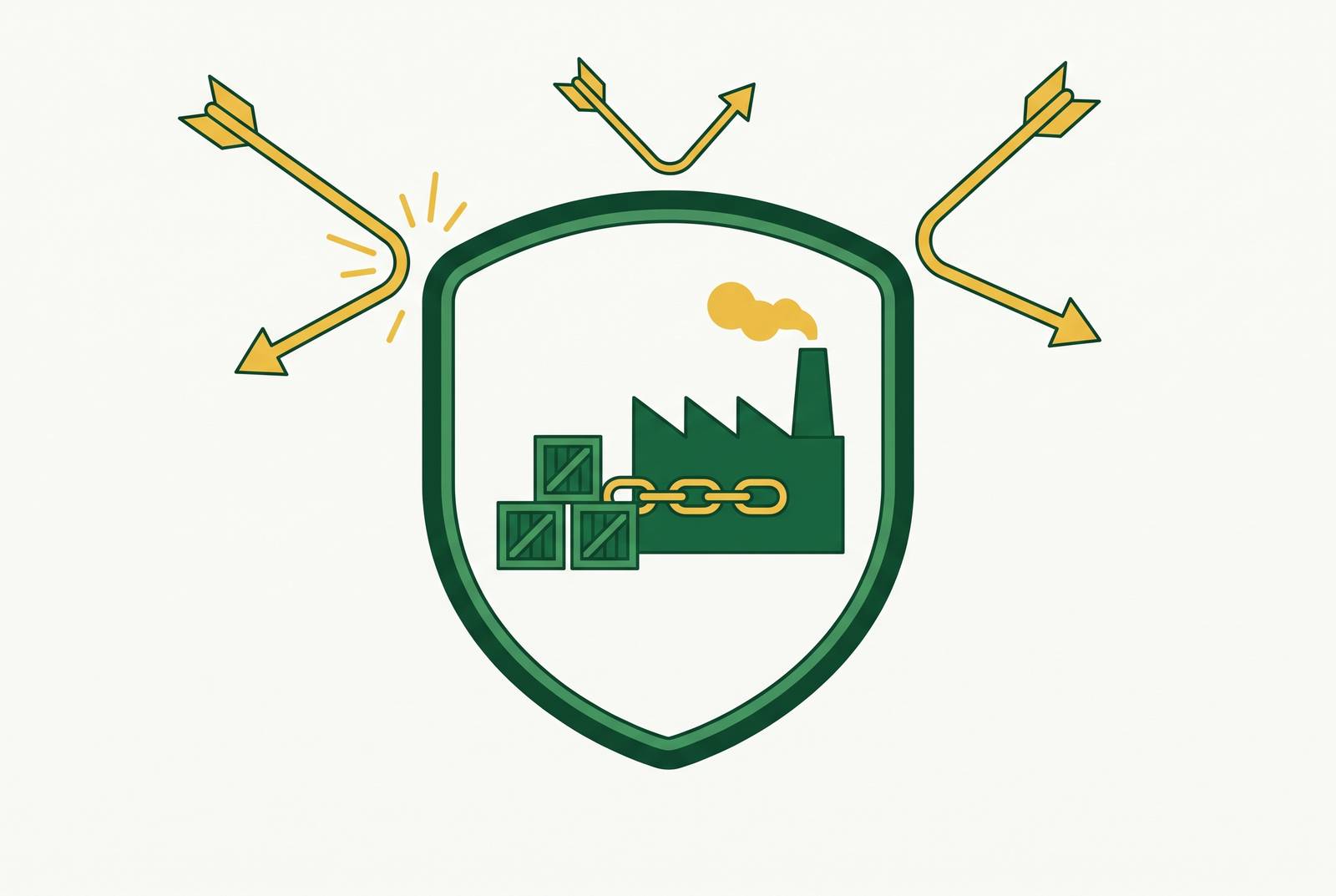
Incumbent supplier status in a manufacturing account is a real asset, not a comfortable fiction sales teams tell themselves. The supplier currently making or providing a part, a chemical, a consumable, holds a position that a challenger has to spend real resources to dislodge, because the buyer's switching costs favor the incumbent even when a competitor's price is lower. Displacing that supplier means requalification, engineering time, first article inspection, updated documentation, and risk the plant manager has to justify to someone above them. That friction is why so many competitive situations in manufacturing never resolve into a clean win for the challenger at all.
That statistic reframes what a challenger is actually fighting. It isn't the incumbent's product, service, or price that stands in the way most often, it's the buyer's own reluctance to disturb something that already works well enough. The incumbent's advantage persists by default, sustained by inertia rather than superior performance earned fresh each quarter. It's structural, baked into the cost and risk of change itself.
Incumbency is most powerful exactly when the supplier believes it needs to do the least. The inertia protecting the account today is doing so passively, without any active effort from the supplier holding the work. Nothing about that protection is permanent, and nothing about it requires the incumbent's continued attention to keep functioning, at least not right away. That combination, real protection paired with the illusion that it's self-sustaining, is where incumbent accounts actually go to die. Research by Matthew Dixon and Ted McKenna cited in Harvard Business Review found that a large share of deals end in no decision (the buyer stays with what they have), with no-decision outweighing losses to any single rival by two to three times.
How incumbent suppliers lose manufacturing accounts
Displacement in manufacturing accounts is rarely a single dramatic loss. It's a slow leak. The incumbent stops actively managing the account's evolving needs, the relationship goes quiet, and a challenger eventually walks through a door that was left open months or years earlier. ISM's manufacturing PMI stayed below 50 for much of 2025, a sustained signal of sector contraction, and in that kind of environment costs rise while employment falls, giving procurement teams every incentive to scrutinize supplier spend they might otherwise have left alone.
Challengers don't attack accounts at random. They probe where the incumbent has known weaknesses that line up with their own strengths, and they wait for triggering events, a leadership change at the plant, a contract renewal date, a product failure, a company acquisition, a new facility opening, because those moments give procurement structural cover to look elsewhere. The actual attack vector is rarely "our product beats theirs." It's "the relationship you have with your current supplier hasn't produced anything new in years, and here's what that's cost you." Slow responsiveness, a lack of proactive engagement, an incumbent who shows up only to renew paperwork: challengers turn every one of those gaps into an argument.
What makes the current period sharper than most is that the incumbent often doesn't know a review has started until it's nearly over. The 2026 State of Manufacturing report from DemandDrive found that buyers now complete more than 70% of their research before sales enters the conversation at all. An incumbent relying on a phone call from their contact to learn that a competitive bid is underway is, by that point, usually behind. The 2025–2026 macro context sharpens this risk.
What plants signal about their evolving needs
A plant is always broadcasting a running signal. What it produces, what equipment sits on its floor, how its volume is trending, what capital it's putting into new lines, all of it is a running broadcast of what that plant will need to buy next. The signals exist. It's that most incumbent suppliers aren't set up to read them, so they keep relying on whatever their day-to-day contact happens to mention, which is a much narrower window than the plant is actually giving off.
Technology adoption inside a plant, an ERP migration, an MES rollout, a shift in PLM systems, tends to signal budget movement toward adjacent solutions, and it opens a buying window for any supplier who can tie their offering to that transition. Capacity expansion is even more telling, and far less forgiving on timing. Waiting for the ribbon-cutting ceremony means arriving after the decisions that mattered were already made. Facility expansion announcements themselves aren't hidden information, either; state and local economic development agencies and trade outlets like IndustryWeek and Manufacturing.net publish them regularly. The signal is public well before most suppliers act on it.
None of this is a minor gap. Deloitte surveyed 600 manufacturing executives in 2025, and a large majority said they plan to put a substantial share of their improvement budgets into smart manufacturing initiatives. Plants are moving faster than the account relationships built to serve them, and that mismatch is exactly where incumbents lose ground without ever noticing the fight had started. In the case of capacity expansion or a new facility, the buying window opens 6–18 months before a facility goes live (when production lines are being designed and vendors specified), meaning that waiting for the ribbon-cutting means arriving too late.
How account depth (knowing what a plant makes and runs) becomes a defensive moat
Every challenger operating against an incumbent starts from a position of guesswork. They have to infer what a plant needs, from public filings, from conversations, from whatever fragments of information they can piece together. An incumbent who has done the work doesn't have to infer anything, because they already know.
Knowing an account at depth means knowing what the facility actually produces, distinct from the SIC code or NAICS classification assigned to the parent company. It means knowing what equipment is running on that specific floor, what consumables and inputs those processes require, what the plant's environmental footprint and production volume look like, and knowing all of that at the facility level rather than the corporate level. That last distinction matters more than it sounds like it should. NAICS codes and headcounts describe companies, not plants, and a single corporate account with five facilities can easily have five different production profiles and five entirely different sets of purchasing needs.
That blindness is a specific and quantifiable vulnerability in multi-site accounts, where an incumbent's relationship with headquarters can mask the fact that individual facilities are exposed and unmonitored. It's also, read the other direction, an opportunity. Analyzing ship-to locations, order frequency, and purchasing patterns across a customer's sites reveals where consolidation makes sense, and volume-based agreements across locations are one of the more effective incumbent defenses in the industry, precisely because they require the kind of facility-level knowledge a challenger doesn't have time to assemble.
Growing share inside existing manufacturing accounts as a defense strategy
The economics here aren't ambiguous. Invesp research referenced by Twilio and ZoomInfo shows selling more to a customer already buying from you succeeds at a dramatically higher rate than selling to a brand-new prospect, and McKinsey found that companies with the strongest cross-selling and upselling programs increase profits by as much as 30%. A Sales Performance Research Center report found that retaining and expanding existing accounts sits among the top three strategic objectives for sales leaders across industries. Growing a manufacturing account is, itself, the act of defending it.
Every tactic that deepens a supply relationship also raises the cost of leaving it. Watching for production scaling at an account and treating that volume growth as a trigger to expand supply, rather than waiting for the customer to ask, is one version. Cross-selling complementary product lines into adjacent process needs is another, because it multiplies the number of touchpoints a challenger would need to replace simultaneously. Helping a multi-site customer consolidate purchasing across locations with volume-based discounts does double duty: it's a genuine value offer, and it's also a structural lock-in, since unwinding a consolidated agreement is a bigger decision than swapping out a single-plant contract. Value-added services wrapped around the core product, on-site assembly support, application guidance, anything that saves the plant labor or time, are hard for a challenger to replicate without the same embedded knowledge of the account that took years to build.
Gartner's research on this cuts against a common assumption. 88% of account managers believe that servicing accounts beyond customer expectations is a formula for growth, yet Gartner's own data found that exceptional service has no significant impact on driving existing account growth. What that tells the incumbent supplier is that proactive account management, watching for triggers and acting on them, is the baseline requirement all suppliers are expected to meet. It's the baseline requirement for staying in the account at all.
Reading and responding to the signals that a challenger is gaining ground
Challengers are precise about where they spend their effort. They target accounts where the incumbent has a documented weak point or where a triggering event has just handed procurement a reason to look around. Recognizing those conditions early lets a supplier defend a position instead of discovering, after the fact, that it's already gone.
A leadership change at the plant or inside the procurement function is one of the clearest warning signs, since a new buyer will often review inherited supplier relationships as a matter of course rather than personal preference. A contract approaching renewal is another, because it gives procurement structural justification to solicit competitive bids even when nothing has gone wrong. Declining order frequency or shrinking order size at a plant whose production volume hasn't actually dropped is a signal worth taking seriously on its own, since it usually means share is migrating somewhere else. A new facility opening under an existing account where the incumbent hasn't yet been specified into the new line is a gap that a challenger will fill the moment the incumbent hesitates. And product or service failures that seemed too small to escalate at the time have a habit of resurfacing later, cited by challengers as evidence that the account has been managed on autopilot.
The tariff environment adds a specific and current version of this dynamic. Tariff volatility at levels not seen in decades is pushing manufacturers to re-examine their supply chains, and procurement teams are using the resulting cost pressure as justification to run competitive bids against contracts that would otherwise have gone unquestioned. That pressure isn't something an incumbent needs to solve by matching price across the board. An incumbent who understands account economics at the facility level can respond with tiered pricing instead, absorbing cost where a smaller, price-sensitive account genuinely can't bear it, while structuring larger accounts around the switching-cost reality that already protects the relationship. Reading the signal correctly, in other words, matters more than reacting to the pressure itself.
Building the operating discipline that makes active defense sustainable
None of the preceding sections hold up as a one-time effort. Account reviews have to run on an ongoing cadence, not surface once a year in a business review deck, for the same reason territory management fails when it's treated as a static snapshot: the accounts keep changing whether or not anyone's watching.
A defense practice that actually holds up operationally starts with reps walking into every account call carrying current plant-level intelligence, rather than relying on memory or notes a quarter stale. It requires clear ownership of multi-site accounts down to the facility level, because coverage gaps at individual plants are precisely where challengers get their first foothold. Sales playbooks and competitive positioning need to be revised as the account evolves, not written once at onboarding and left untouched for the life of the relationship. And none of it works without CRM records that reflect what's actually happening on the plant floor; stale or generic account data produces stale results, and a CRM fed by real, current manufacturing intelligence is what turns cadenced review into something manageable rather than another burden on the rep's calendar.
There's a time-cost case for this as well. Research cited by Sales Leads Inc. shows a large majority of high-growth companies run value-based selling strategies, and value-based selling into a manufacturing account depends on knowing what the plant actually makes before the conversation starts, not piecing it together mid-call while the buyer waits. Every hour a rep spends manually researching a plant before picking up the phone is an hour not spent deepening the relationship or finding the next expansion opportunity. Industrial sales intelligence platforms built to index facilities at scale, and surface account signals in plain language, exist to shift that ratio back in the rep's favor, connecting into CRM systems like HubSpot, Salesforce, and Dynamics 365 so the intelligence sits in front of the whole sales organization rather than living in one tenured rep's head.
That, in the end, is what active defense actually comes down to. Incumbency bought passively is a lease with an expiration date nobody bothered to read. Incumbency defended through account depth, current intelligence, and a cadence that never lapses is something closer to ownership, and the supplier who knows a plant better than any challenger could ever claim to is the supplier that doesn't lose the account quietly.