Water Treatment Account Growth in Multi-Process Industrial Facilities
Most water treatment contracts at industrial plants cover only one system when facilities run four.
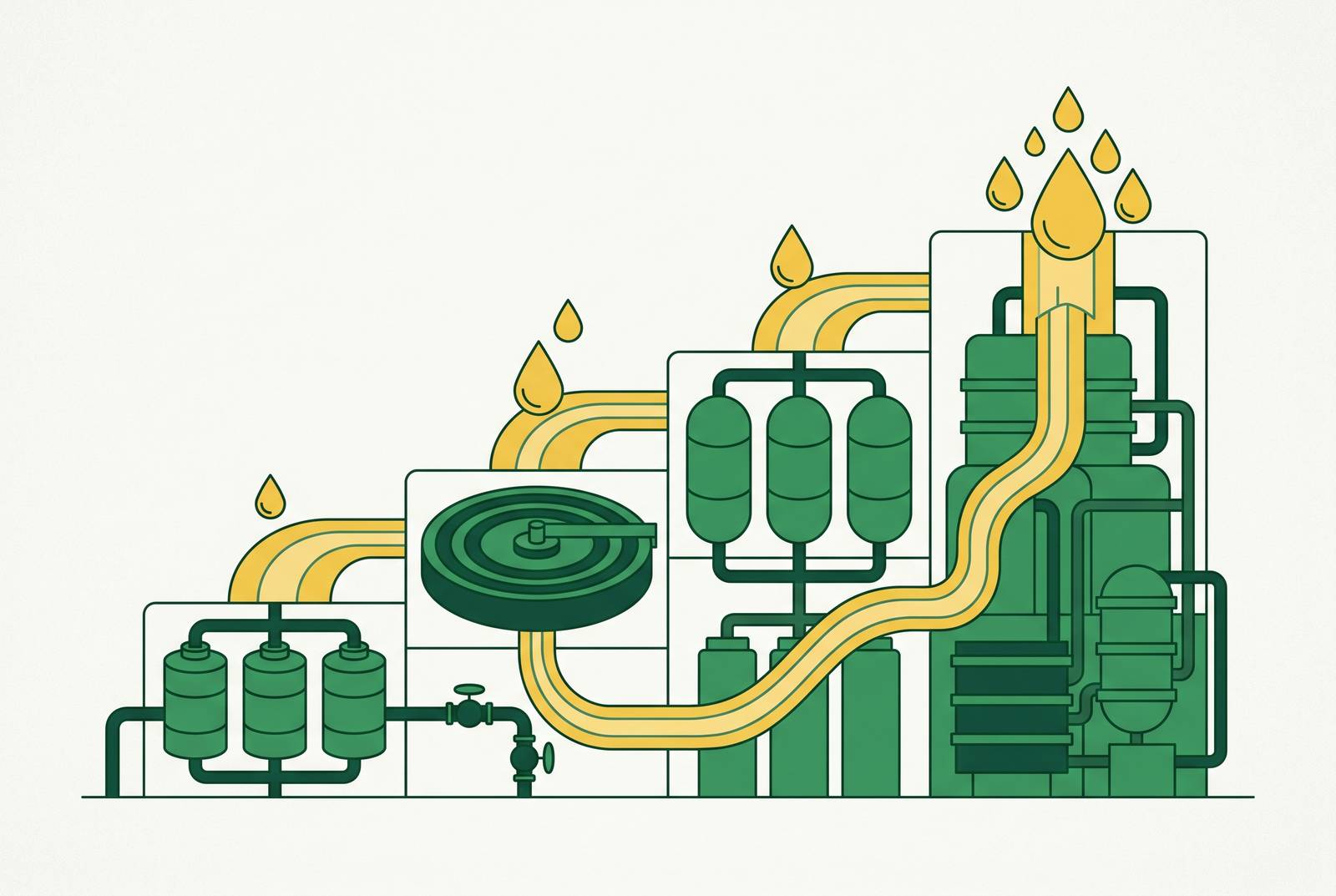
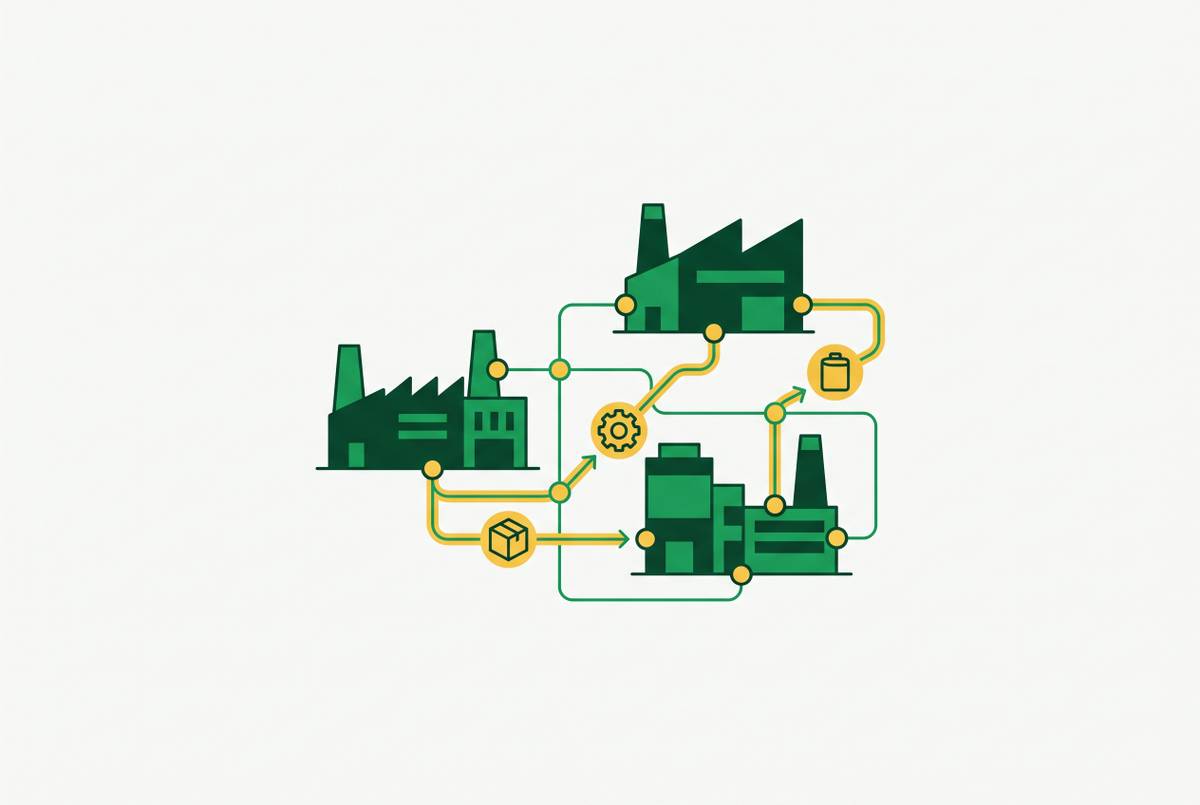
A single water treatment relationship at a manufacturing site almost never covers what the site actually needs. Multi-process plants run several distinct water systems at once, cooling towers, boilers, process water, wastewater, and each one carries its own chemistry, its own buyer, and its own contract. The sales teams that grow accounts fastest are the ones who map every system in a plant before assuming the current deal covers the whole facility.
Multiple Discrete Water Treatment Programs in Multi-Process Plants
The mistake occurs early and often: a rep lands a cooling tower account and treats the relationship as the facility. It isn't. A typical multi-process industrial plant is running cooling towers, steam boilers, process water circuits, and a wastewater or effluent system all at the same time, and each one is its own purchasing decision with its own chemistry, its own dosing schedule, and its own compliance obligation.
Cooling tower programs run on biocides, scale inhibitors, corrosion inhibitors, pH adjusters, coagulants, and anti-foaming agents. Boiler and steam programs use oxygen scavengers, sludge conditioners, and pH conditioners, sold and serviced on a completely separate schedule from anything happening at the cooling tower. Process water and ultra-pure water carry their own purity standards and chemical classes, unrelated to whatever chemistry treats the plant's utility water. Wastewater and effluent systems need their own program for scaling, corrosion, microbial control, suspended solids, and membrane care, and that holds even when the water never leaves the site and gets reused internally.
A rep supplying cooling tower chemistry to a plant that also runs a boiler and an internal wastewater reuse loop may be capturing less than half of what that facility actually spends on water treatment. This is a program the rep must actively build a picture of, not a sales technique waiting to be applied. It's an accuracy problem: the rep's picture of the account is incomplete, and no amount of relationship-building on the cooling tower side fixes a gap the rep doesn't know exists.
How large the addressable pool of untapped programs is
The industrial water treatment market is USD 50.5 billion in 2026 and is on track to reach USD 84.6 billion by 2036, a 5.3% compound annual growth rate, according to Fact.MR. Treat that number as the ceiling: it's the sum of everything currently being captured across cooling, boiler, process, and wastewater programs combined, by every supplier in the market, not just the leaders.
Within the broader water treatment chemicals market, the industrial segment alone held a 45.7% share in 2025, according to Polaris Market Research, the largest single segment, pulled along by demand from chemicals manufacturing, food and beverage, mining, power generation, and pulp and paper. Nearly half of all water treatment chemical demand runs through industrial facilities, and those are the same facilities where most existing sales relationships cover exactly one program Polaris Market Research. That gap between what a plant spends and what a single supplier captures is where the growth sits.
Cooling water treatment is the most common front door into an account, and it held 30.12% of the water treatment chemicals market in 2025, per Mordor Intelligence. It's real money, and it's the easiest program to sell first.
Purchasing signals from each water system in a multi-process plant
Cooling towers are the most familiar entry point, and their presence signals a direct need for corrosion inhibitors, biocides, and scale inhibitors. Aging cooling tower infrastructure across North America and Europe is now a specific driver of corrosion inhibitor demand, which makes this a renewal and upgrade signal. The scale and corrosion inhibitor segment is projected to grow at 4.8% a year from 2026 through 2033, per Grand View Research, meaning even a mature cooling tower account keeps generating purchasing pressure long after the initial sale.
Boilers and steam systems run on an entirely separate program, sold and maintained apart from cooling water, with oxygen scavengers, sludge conditioners, and pH conditioners as distinct products on distinct service intervals. Any plant running both a cooling tower and a boiler is, at minimum, a two-program account, and most reps who hold the cooling program have never actually confirmed whether they hold the boiler program too.
Wastewater and effluent treatment deserves particular attention because it's easy to assume away. Even a plant that recycles its wastewater internally, running a reuse loop or a zero-liquid-discharge configuration, still needs chemistry to control scaling, corrosion, microbial growth, suspended solids, and membrane fouling. That's a complete program, not an afterthought. The industrial wastewater treatment market was valued at USD 31.97 billion in 2025 and is growing at 6.2% a year, making it one of the fastest-growing sub-segments across industrial verticals Research and Markets. A rep sitting outside that conversation at an existing account is watching real revenue walk to a competitor.
Process and ultra-pure water matters most where product quality depends on water purity: food and beverage, pharmaceuticals, specialty chemicals, and semiconductor-adjacent manufacturing all fall here. Ultra-pure and high-purity water treatment is forecast to grow at 7.33% a year through 2031, the fastest rate of any water treatment chemical category tracked by Mordor Intelligence, which makes it the single highest-growth upsell inside an account a supplier already holds. Ecolab's acquisition of Ovivo's Electronics Ultrapure Water business in December 2025, with integration and purchase accounting still unresolved as of mid-2026, shows where a major player is placing its strategic bet.
Put together, the exercise for anyone walking a multi-process plant is straightforward to describe, even if it takes real legwork to execute: identify which of these four system types the facility actually runs, then identify which ones the current supplier relationship actually covers. The space between those two lists is the immediate growth opportunity, sitting in plain sight.
Adjacent processes that compound the opportunity: metalworking and fluid management
Plants running CNC or machining operations add another layer entirely. Metalworking fluids, coolants and cutting oils, eventually need disposal or treatment, which ties the fluid program directly to the facility's wastewater chemistry. The metalworking fluids market is not a minor adjacent line item, valued at USD 12.81 billion in 2026 and projected to reach USD 16.72 billion by 2032, growing at 4.47% a year, according to Research and Markets.
Buyer behavior in this category shifted in 2024 and 2025, with procurement teams moving toward longer fluid replacement cycles, lower mist generation, and reduced operator exposure risk, per Reports and Data. The practical effect is that a plant may now be running a more complex, multi-fluid purchasing profile than it showed even a few years ago, and the wastewater consequences scale up with it. Contract manufacturers running mixed-material production in a single facility add further complexity, carrying a broader fluid chemistry footprint than a single-material operation ever would.
Follow the logic through: a rep who knows a plant runs a cooling tower and a machining line has just identified three separate program gaps to investigate, cooling tower chemistry, the metalworking fluid program itself, and wastewater treatment for the spent fluids that come off it. None of that requires speculation. It's a direct consequence of knowing what the plant actually makes and how it runs.
Regulatory triggers that open conversations about programs the current supplier isn't covering
PFAS regulation is the clearest live trigger in the market right now. In spring 2026, the EPA withdrew its proposed rule that would have listed nine PFAS compounds as hazardous constituents under RCRA, and no finalization has occurred since; a final rule remains unlikely before January 2027 Fact.MR. That's an unresolved compliance question, and it's exactly the kind of thing a plant's environmental manager cannot simply set aside. A rep who already understands a facility's wastewater configuration and discharge profile can walk into that conversation with something specific to say, rather than a generic pitch about chemistry performance.
Zero-liquid-discharge mandates are doing something similar in power generation, mining, and water-stressed industrial regions, pushing facilities to reconfigure entire water circuits. That kind of reconfiguration displaces whatever chemistry program was running before it and opens a re-bid across all four system types at once, cooling, boiler, process, and wastewater together.
In North America specifically, Clean Water Act enforcement and EPA PFAS maximum contaminant level compliance are cited as primary growth catalysts by Fortune Business Insights, and the annualized compliance costs facing water systems are substantial, per EPA's own Economic Analysis as cited in Market Research Future's report. Environmental managers at manufacturing plants are actively looking for a chemistry partner who understands the regulatory landscape they're operating under. The rep who already knows which programs a plant runs, who currently supplies them, and which regulatory deadline is closing in has turned a compliance conversation into a pipeline event.
Multi-program coverage as the market's leading players' primary retention and growth mechanism
The dominant competitive posture among the biggest names in this market centers on the integrated service model. It's the integrated service model, chemicals bundled with equipment and technical service, and it's become the default way the largest suppliers defend and grow their accounts.
Nalco Water, Ecolab's water division, positions itself explicitly around minimizing water and climate impact while optimizing a customer's total cost, backing that up with onsite services and software layered on top of the chemistry itself. The company fields roughly 27,000 sales and service associates and holds a patent portfolio exceeding roughly 10,000 patents, and both numbers matter less as trivia than as switching costs: a competitor trying to displace that relationship on a single program is fighting an account that's wired into far more than one supply line.
Solenis tells a similar story. Following its 2023 merger with Diversey, the combined company's revenue topped roughly $8 billion by 2025, and its portfolio now spans water treatment chemistries, process aids, functional additives, lubricants, degreasers, cleaners, disinfectants, and monitoring and delivery systems. That's close to a template for what multi-program coverage looks like once a supplier reaches scale.
The competitive field is crowded at the entry point. Nalco, Ecolab, US Water, SUEZ Water Technologies & Solutions (the former GE Water business), ChemTreat, Drew Industrial, Solenis, and Chem-Aqua are all active in cooling tower and boiler chemical sales, and cooling towers specifically are where the most competitors collide. But that field thins out fast once the conversation moves to process water and wastewater. Suppliers with established on-site service capability keep their pricing power there; distributors without that capability end up competing on price alone, or they consolidate. For a regional or specialty player, the gap to close isn't chemistry breadth. It's the discipline to map the full facility and show up with a program-level conversation instead of a product call.
Which accounts and programs plant-level data prioritizes
No rep covering several dozen accounts can walk every plant and map every system from scratch. The real question is which accounts carry the highest odds of hiding an untapped program, and answering that requires knowing what each plant actually makes and runs, not just its name and address.
Plant-level data answers a handful of specific questions. What the facility produces points toward which water systems are likely present: a food and beverage plant almost certainly needs process water treatment, a machining operation almost certainly generates metalworking fluid wastewater that needs handling. What equipment the facility runs, cooling tower capacity, boiler size, CNC lines, finishing lines, signals specific chemistry programs directly. Production volume and intensity turn a flat list of accounts into a ranked opportunity set, since higher-output plants generally carry bigger program spend. And a facility's environmental footprint and discharge profile signal how complex its wastewater program is likely to be, along with its exposure to PFAS corrective action requirements.
NAICS codes and headcount figures, the usual fallback, can't make these distinctions. They can't tell a plant with both a cooling tower and a boiler apart from one running only a cooling tower; the data approximates the account instead of actually profiling it. That's a meaningful limit, because the whole point of prioritization is telling apart a plant where the rep has mapped whether they also own the boiler program from one where they have not, before the first call gets made.
Territory plans built on real plant-level data and written back into Salesforce, HubSpot, or Dynamics 365 give reps something closer to the actual account profile, instead of a firmographic record that's gone stale. Industry-based territory design works best when the domain knowledge lives inside the system the rep uses every day, not locked away in one person's head. The output of all this is simple to state even if it takes work to build: a ranked list of existing accounts where the current program covers just one system type, sorted by estimated total facility spend. That list is the growth plan.
A practical sequence for expanding share in a multi-process account once the mapping is done
Start by confirming what's actually owned. For every active account, identify which of the four system types, cooling, boiler, process water, wastewater, the current relationship supplies, and which ones it doesn't. The space between the programs a rep owns and the systems present at a plant running both a cooling tower and a boiler is the map for where growth comes from.
From there, rank the gaps by value. Wastewater programs are growing at 6.2% a year and are frequently the least-covered piece of an incumbent's book, making them a natural first target for expansion Research and Markets. Ultra-pure and process water programs grow faster still, at 7.33% a year, and tend to carry premium chemistry along with service contracts to match, so they're worth prioritizing at food and beverage, pharmaceutical, or specialty chemical sites specifically Mordor Intelligence. Boiler programs deserve their own line of attack too, since they're often owned by a different internal buyer than the one who signs off on cooling tower chemistry, which means it takes a separate conversation rather than a bolt-on to an existing call.
That points to the next step: finding the right person for each program. Cooling tower purchasing usually sits with facilities or maintenance, wastewater decisions often run through the environmental or EHS manager, and process water can land with quality or operations depending on the plant. Multi-program growth simply doesn't happen through a single contact, no matter how strong that one relationship is.
Timing matters as much as the pitch itself. PFAS corrective action obligations, tied to the nine hazardous constituents proposed for RCRA listing in spring 2026, open the door to EHS conversations that wouldn't otherwise happen on schedule. Zero-liquid-discharge expansion or a wastewater reconfiguration opens a re-bid across the entire water circuit, not just one program. Equipment upgrades and new production lines signal a new program getting stood up before any supplier has locked in the relationship, so they're worth watching too.
The last step is really a matter of posture. The integrated service model, chemicals paired with monitoring and technical service, is what builds switching costs and keeps accounts in place over the long run. A rep who shows up with a facility-wide view of a plant's water chemistry needs is playing a fundamentally different game than one who shows up to sell the next drum. Measured correctly, success here is share of wallet at the facility level. It's share of wallet at the facility level, visible in a water treatment sales team moving from one program to two or three across its top twenty accounts.