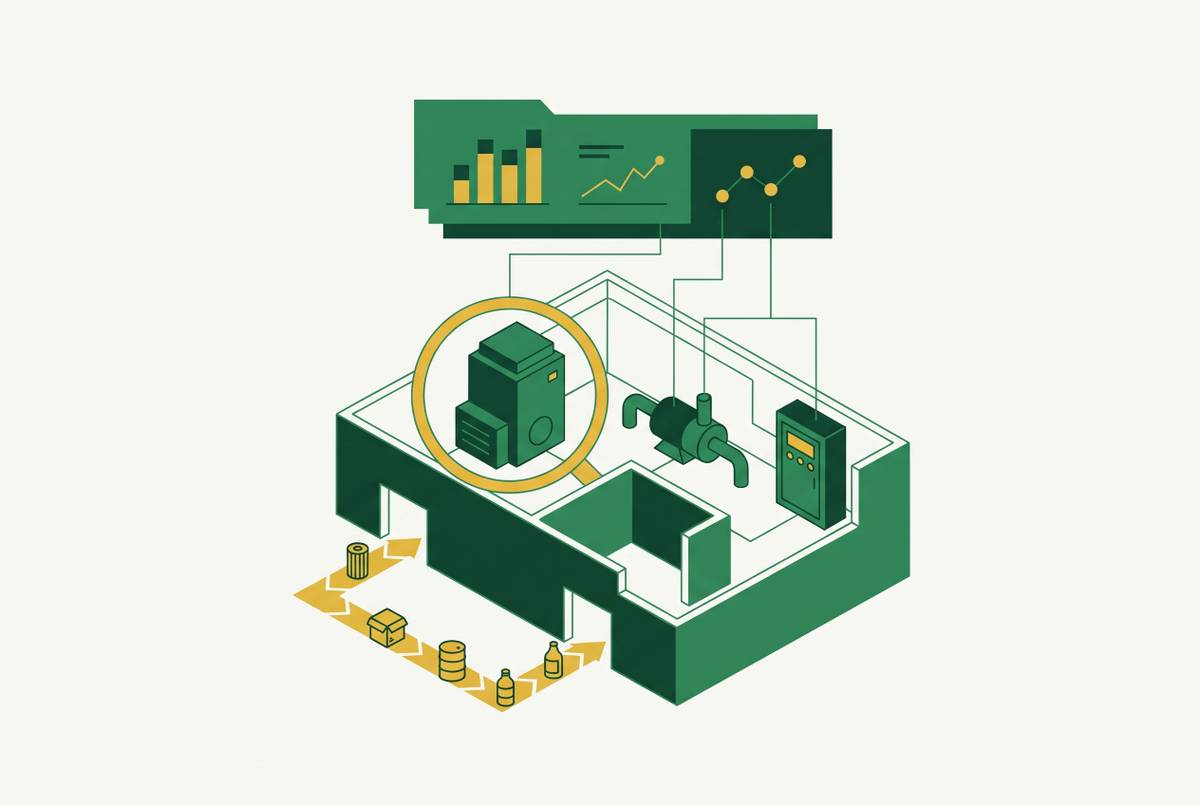
What a Plant Actually Runs and Buys Versus What Its Parent Company Reports
Parent-company records hide what each plant makes, runs, and buys.
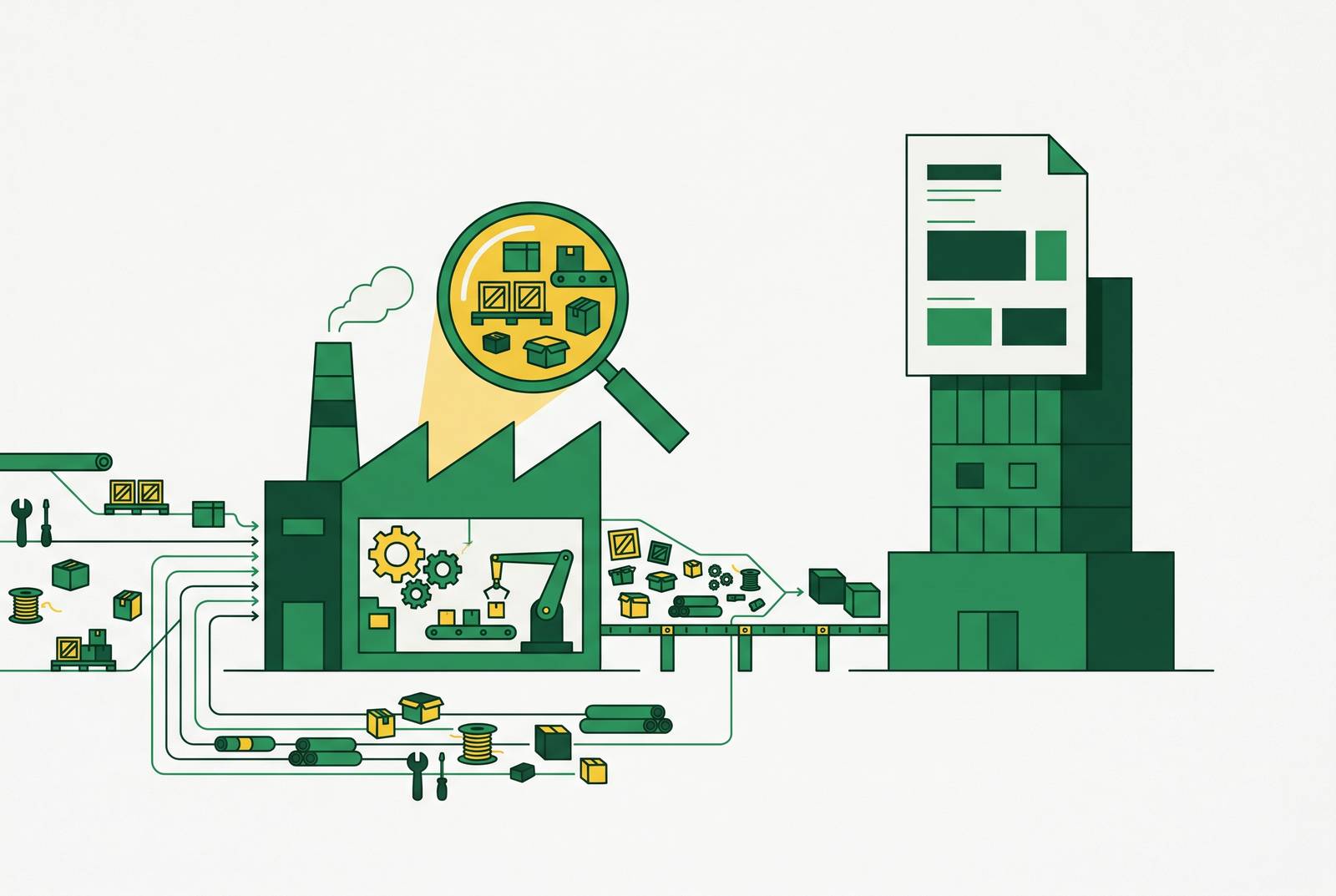
Plant-level manufacturing intelligence for industrial sales teams describes what each facility produces, the processes and equipment it runs, the inputs it buys, and the conditions that trigger purchases. Parent-company profiles describe the enterprise but leave out what its plants need to run. Effective industrial selling therefore starts with a plant record linked to its parent, rather than a corporate record treated as a substitute for every facility beneath it.
Why parent-company data is the wrong unit of analysis for industrial sales
One account record, a dozen facilities, and no visibility into what any of them actually runs. That is a data-architecture problem. A parent company can operate facilities across multiple states, each with its own production line, equipment set, budget authority, and purchasing manager. Collapsing those facilities into one row removes the distinctions a rep needs to qualify an opportunity. Better questioning cannot compensate for an account structure that does not identify where the relevant production happens.
The plant is the buyer in this operating sense. The plant manager is responsible for resolving issues in production, the plant engineer validates the specification, and the plant procurement lead cuts the purchase order. SPOTIO’s manufacturing sales playbook describes a buying committee with people in those roles and a budget approver, so the rep has more than a single corporate contact to work with. A parent relationship may frame the account, but it does not identify the people responsible for a particular facility’s purchase. Corvus, a demand intelligence platform for chemical and industrial suppliers, profiles more than 500,000 plants by what each one makes and runs rather than by company headcount or NAICS code. Without that separation, the rep sells to an average of the plants, which describes none of them accurately.
What parent-company reporting does and does not disclose
Consolidated revenue and segment-level financials describe the scale and performance of the enterprise. Total headcount shows how many people work for the company, sometimes broken down by segment or geography, while business-unit product lines and brand portfolios show what it sells. A registered legal address generally points to headquarters. These fields answer questions about the company without establishing what happens at any particular address.
The boundary is especially clear in industrial classification. Plants that do stamping, coating, and assembly may all fall under the same corporate classification. The code does not specify the equipment, capacity, materials, chemicals, or fluids at each site. Nor does it establish whether a facility is expanding, idling, changing its production mix, or maintaining a particular supplier relationship.
How M&A activity makes the gap wider and harder to track
Mars’s $35.9 billion acquisition of Kellanova in 2025 moved a global snacking and packaged-food manufacturing network under a different parent. For sellers, the operational consequence was not the transaction’s size but the possibility that purchasing relationships across those facilities would be renegotiated. A familiar plant could remain a relevant prospect while its route to purchase changed. An old corporate record would not show which relationships were still in place after the change in ownership.
Amcor’s SEC Form 10-K states that it completed its merger with Berry Global on April 30, 2025. That merger also changed who owned the rigid, flexible, and specialty packaging operations. For a supplier, the new parent relationship creates questions that an updated company name alone cannot answer. An active plant account may now fall under the acquirer’s preferred supplier arrangements, while a previously inaccessible facility may become open to qualification. Plant-level visibility is needed to distinguish them and to keep account ownership aligned with the facilities a rep can actually serve.
What a plant's process actually signals about what it will buy
A plant machining Inconel or stainless steel at high speeds and tight tolerances needs a different metalworking fluid from a plant doing general steel turning. The fluid specification depends on the metal, the operation, how fast the equipment runs, and the tolerance requirements. “Metal parts” does not provide that purchasing signal. Process knowledge does, because it connects an observable operation to the inputs required to sustain it. A rep who understands the operation can lead with a relevant product.
The same relationship holds for chemicals and packaging. A coating line, adhesive application, surface treatment, or water treatment loop requires formulations suited to its substrate, process temperature, regulatory environment, and equipment. A plant’s rigid, flexible, or specialty packaging format similarly shapes its demand for resins, adhesives, coatings, and inks. Where production requires a known sequence of inputs, evidence that earlier inputs have been sourced can provide forward-looking evidence of need for those that follow.
Process ownership also changes the purchasing map. A plant that brings a process in-house becomes a buyer of the materials that process consumes, while one that outsources it may instead buy the finished component. That make-versus-buy decision depends in part on capacity, quality, core competency, and cost. The corporate structure can remain unchanged while the facility becomes a prospect for an entirely different product category.
Why procurement decisions happen on plant schedules, not corporate calendars
Amazon Business’s 2026 manufacturing procurement guide distinguishes direct, indirect, and maintenance, repair, and operations procurement. Each category has a different relationship to plant activity. Direct procurement brings in raw materials and production inputs, often under long-term contracts that are closely tied to production planning. A disruption can stop the line. Indirect procurement covers supplies and services that do not go into the product, and spending is often spread across departments.
MRO procurement follows the condition of equipment and facilities. It is high-frequency purchasing that can create opportunities for suppliers who know the installed machinery and its maintenance requirements. The ISM Manufacturing PMI Report recorded an average commitment lead time of 49 days for MRO supplies in 2025, the shortest of any procurement category. That timing is distinct from a direct-materials commitment tied to a planned production run.
An aging machine, approaching compliance date, new capacity, or fluid running out of specification can create a need that the corporate fiscal calendar does not explain. Equipment age, certification renewal dates, and signs that a plant is expanding can help a rep see when it may be getting ready to buy. A corporate account record may point to the right company but leave the rep unable to tell an active buying window from a dormant opportunity.
What territory planning built on company records misses
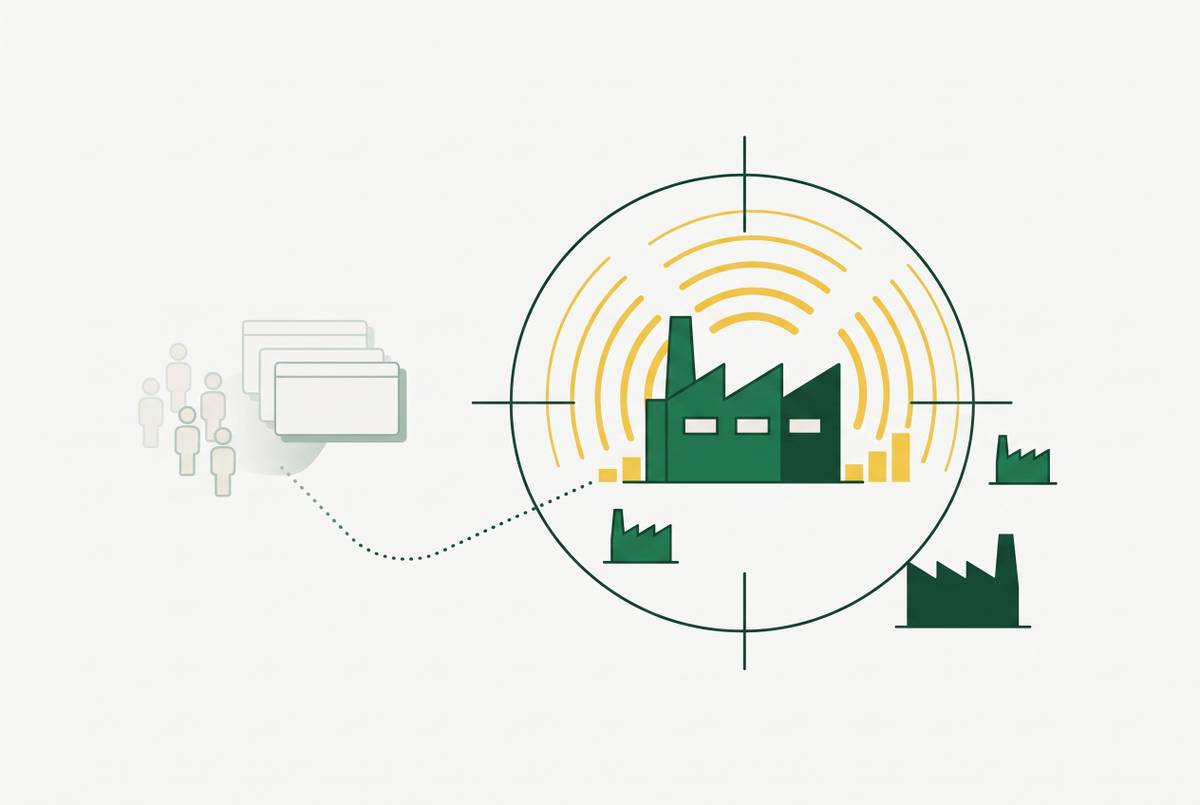
Company counts conceal the distribution of manufacturing work. One corporate record may represent one plant or fifteen, with those facilities clustered in one area or scattered across several territories. An area with many headquarters or holding companies may also have few plants that make anything locally. A territory model built on registered addresses can therefore overstate opportunity in one area and hide it in another. The resulting coverage gap is structural.
Revenue, headcount, and classification can give a large parent priority even when its local facility is in maintenance mode. A mid-size company with three plants that are active and expanding may get less attention even though those plants have more potential to buy. Reps then spend time based on how big a company looks. The account score and the field opportunity point in different directions.
SPOTIO documents a distribution company whose West Coast territory included a substantial amount of uninhabited land. Reps had been planning routes through areas with no prospects, and coverage changed only after actual account locations were mapped. The example exposes the weakness of treating geographic extent as opportunity. Accurate industrial territory design requires plant-level density data, including where facilities running the relevant processes actually concentrate.
What data helps reps understand what a manufacturing facility actually produces and buys
Useful plant data begins with the facility’s own output. It identifies the products, materials, or components made at that site, rather than assigning the parent’s entire portfolio to every location. It then connects that output to operations such as machining, forming, coating, mixing, extrusion, or assembly. Those operations establish the likely input requirements. Equipment detail shows what machinery is installed, how old the technology is, what maintenance it needs, and the compatibility requirements a proposed product must meet.
A facility running at capacity has a different purchasing posture from one expanding or operating below capacity. Permits, certifications, and regulatory obligations define constraints on materials and identify requirements for replacement or upgrades. These operating conditions explain both what a plant can use and what it may need to change.
Hiring patterns, permit filings, equipment purchases, and production changes can indicate that a purchase is forming. For small and mid-size plants, those physical triggers are often more useful than evidence of online reading. The practical evaluation criterion for a manufacturing intelligence tool is therefore whether each record represents a distinct plant, with its own address, headcount, and verified field data. A company name appearing in a database does not establish that the database understands its facilities.
How plant-level intelligence changes cross-sell and account growth inside existing accounts
An existing corporate relationship can conceal substantial uncovered opportunity. The account record may show which business units buy, without identifying the individual plants that have been qualified or the product categories each facility purchases. It may also omit adjacent facilities running the same processes that have never been approached. The seller cannot distinguish a fully served corporate family from a narrow relationship at one site without a plant-by-plant view.
A plant already buying a cutting fluid, coating, or water treatment chemical has established a relationship and validated fit for that purchase. A related second or third product may face less qualification friction when it addresses the same process requirements. It gives the rep a more specific basis for evaluating the next opportunity than the parent’s industry classification provides.
Qualification at one facility provides relevant evidence for another plant running the same process, but the seller first needs to know where that process exists. A CRM organized only around the parent cannot reliably distinguish buying plants, partially served plants, and untouched plants. Linking process profiles to purchase history shows those differences within an account that might otherwise look fully served.
What to do with the gap: the practical steps for building a plant-record sales motion
The practical response is to change the sales operating unit. Sales leaders and sales operations teams should create a CRM account record for each plant and link it to its corporate parent. Each facility needs its own address, process profile, equipment data, purchasing contacts, and activity history. This preserves the ownership relationship without allowing it to replace the operating record. The change is not merely enrichment of an existing company row.
The next step is to audit current coverage. For every corporate account, identify the associated facilities, distinguish those being actively sold to from those left uncovered, and flag plants running processes that require the seller’s products. Use that plant map to build territories around where plants running the right processes are clustered, rather than where companies have registered addresses. Account priority should reflect what those plants run and their purchasing potential.
Before a visit, the rep should know what the facility makes, which processes it runs, and what those processes imply about its needs. Populate the CRM with expansion signals, new equipment, permit filings, and compliance deadlines as well as static operating data. The resulting sales motion gives each call a defined facility, a process-based reason for contact, and a plant-level reason to act now.