The Facility-Level Data Sources That Surface Budget Activity and Expansion Intent in Industrial Accounts
Permits, projects, CapEx, and hiring reveal plant buying intent early.

Records for each facility show industrial buying activity that standard B2B intent data misses. For industrial sales outreach timing, the strongest evidence combines permits, active capital projects, funded CapEx, and operational hiring at the same plant. Production profiles then show whether that activity represents a relevant equipment, process, or chemical supply opportunity before specifications and vendor lists are settled.
Why standard B2B intent data fails when the buyer is a plant, not a software team
Standard B2B intent infrastructure was built for software buyers who leave digital traces when they download content or use keywords. Plant-floor buyers do not reliably leave those traces. Topic-based intent is therefore structurally blind to parts of the manufacturing buying process. An account may be getting ready for a large purchase even when it shows no digital signal.
The buying unit is also different in manufacturing. The plant is the primary unit of sales activity within a corporate hierarchy, while a headquarters record compresses distinct facilities into one account. A pump manufacturer’s CRM, for example, listed a global OEM as a single account in Chicago. Plant-level enrichment separated it into multiple records across several states, including two facilities mid-expansion that the rep had been ignoring. Without those distinctions, outreach can begin only after other suppliers have helped shape the shortlist.
What facility-level signals actually reveal about plant spending and timing
A facility signal is a record of physical, regulatory, or operational change tied to a particular plant. Permits, project filings, equipment events, and staffing changes show what is happening at a plant whether or not the buyer is active online. They reveal changes in what the plant can produce, how it operates, or what it intends to build. These are traces of operating decisions. That distinction makes them useful even when the people involved have thin professional profiles.
The commercial value lies in the interval between those traces and the eventual purchase. Manufacturing evaluations can take many months, and an expansion announced today can shape what a plant buys for years to come. Groundbreaking may be more than a year away. Even so, decisions about equipment, controls, and chemical supply can begin before physical work starts. Facility-level signals make that early decision window visible, rather than treating construction or procurement outreach as the beginning of demand.
Permit filings and environmental records as early indicators of plant change
Environmental and construction permits are among the earliest external records of a changing production footprint because regulatory approval must precede physical work. EPA filings and air and water permits record process changes, new emission sources, and capacity additions. Each can point to different needs for chemicals, utilities, or equipment. For a specialty chemical supplier, an air permit amendment for a new reactor or modified process line exposes a potential change in chemistry. The incumbent’s position is not guaranteed in that change.
A permit alone leaves lead qualification incomplete, with the vendor under consideration and the exact dollar value of the opportunity undetermined. Public availability also does not make the records easy to use, as unstructured filings are scattered across thousands of state and local agencies. FacilitiesFinder combines EPA filings and public records with satellite imagery, map providers, and company websites to build structured facility profiles. The practical value comes from linking a regulatory event to products, capabilities, equipment, and contacts, rather than presenting a filing without operating context.
Capital project databases and what active project status means for sales timing
Industrial capital project databases link what is happening at a facility to chances to sell during planning, engineering, construction, and commissioning. During early planning, a supplier has time to get its product into a specification, often months before procurement issues RFQs. Construction can already be too late to introduce a new ingredient or process chemical. Planned, active, delayed, and completed records therefore represent different outreach windows.
Project records can also link an investment to owner-operator portfolios and unit-level capacity, showing related chances to sell at other plants owned by the same parent company. PECWeb tracks outages and turnaround schedules at the unit and facility level, identifying windows for maintenance chemicals, lubricants, inspection services, and replacement parts. Long-term service agreements in project databases show which types of equipment have locked-in vendor relationships. Their expiration dates can reveal a future opening even where the current relationship limits access.
SEC filings, earnings calls, and CapEx disclosures as confirmed spending signals
Financial disclosures strengthen project intelligence when they establish that an investment has funding. A manufacturer’s 10-K, 10-Q, or earnings call may show that spending has been approved, but the disclosure alone does not show that the board approved it. Authority depends on project size and the company’s delegation-of-authority policy. Management may hold that authority. Explicitly approved CapEx is stronger evidence because the project has survived internal scrutiny and has a funding source.
Earnings calls can include plant names, production lines, locations, and timelines that are missing from formal filings. Those details let a commercial team match a financial commitment to an existing facility record. The practical approach is to compare disclosures with active project entries, rather than use corporate CapEx as a standalone prospecting trigger. Agreement between the two raises confidence in a near-term opportunity. Ownership changes provide a parallel financial signal because an acquiring company’s preferred vendor list may reopen a plant that previously appeared inaccessible.
Hiring patterns at a plant as a leading indicator of operational change
Hiring reveals another dimension of investment intent before commissioning and supplier onboarding. The roles are more informative than headcount alone. A cluster of process engineering and automation technician postings at one plant suggests line expansion or a technology upgrade. EHS and regulatory hiring can instead point toward compliance-driven changes in chemical inputs or waste treatment. ERP and MES migration roles indicate re-platforming that can disrupt integrations and create new specification needs.
Workforce signals also cover private companies and foreign-owned subsidiaries that have no public financial disclosures, as well as publicly traded manufacturers. A new VP of Operations or plant manager may review vendors during their first months, creating an opening for suppliers outside the incumbent relationship. Hiring alone, however, does not show that an investment has funding. Its value grows when a permit filing or active project entry points to the same facility at the same time.
How signal clusters — not single data points — identify accounts in an active investment cycle
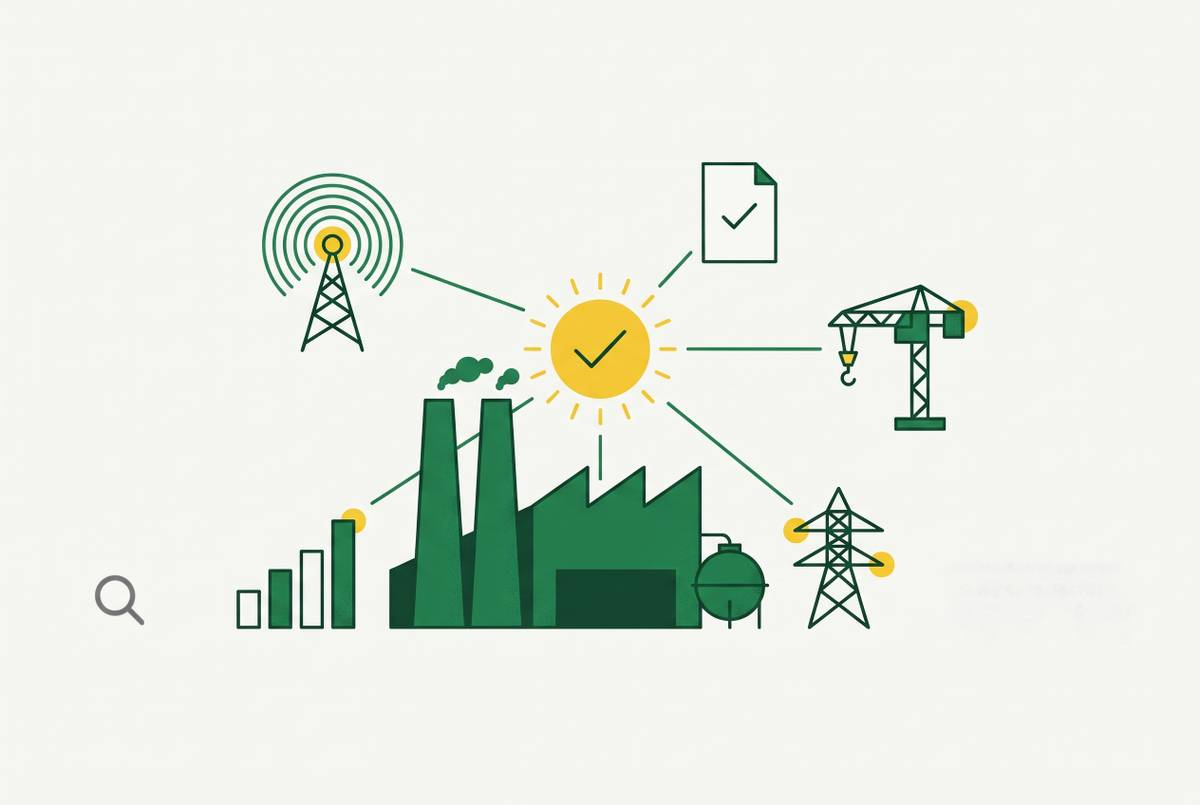
Concurrent signals are stronger because they reflect different organizational gates. A permit records regulatory activity, a CapEx disclosure shows where capital has been assigned, and operational hiring shows commitments to staff. Together, facility expansion, automation hiring, and an earnings mention of CapEx show organizational, financial, and operational movement toward change. A lone posting cannot establish that breadth of commitment. The cluster gives a commercial team a firmer basis for prioritizing the plant over accounts with isolated activity.
For specialty chemical suppliers, a process change permit combined with a sustainability commitment and new engineering hires is especially relevant. Together, these signals suggest that formulation parameters may change and that the incumbent chemical specification may no longer fit. It exposes a window for engagement before the choice of a replacement supplier settles. Groundbreaking may still be a year or more away. Waiting for an unambiguous public milestone risks arriving after competitors have entered the technical conversation and influenced the preferred vendor list.
What plant-level production profiles add beyond trigger signals alone
A production profile adds what a facility makes, the equipment and utilities it runs, its process certifications, and the inputs those processes require. These details distinguish an active investment from a qualified opportunity for a particular supplier. They also replace some of the manual reconstruction previously dependent on spec sheets, site visits, and CRM notes.
A plant using metalworking fluids, coatings, and water treatment has potential needs across several product lines, but a SIC code alone does not expose that combination. Equipment and process records make those connections visible without requiring a rep to rebuild the operating picture from old notes. Mapping facility density, process type, and active projects together allows sales operations to organize coverage around concentrated opportunity.
CRM data as an internal signal source that most commercial teams already hold but rarely use
ERP and CRM records contain purchase signals that external monitoring cannot supply. An account ordering materially less over several months can indicate churn risk, while credit holds can point to financial stress. Service ticket spikes on aging equipment can suggest an approaching replacement cycle. The commercial team often does not see these signals. Yet they describe the behavior of an existing customer more directly than an external project announcement does.
Internal records still stop at the business already known. They cannot show all purchases from competitors or identify an untouched plant. Enrichment with plant-level firmographics, precise SIC and NAICS codes, ERP and MES technographics, certifications, and trigger events connects purchase history to the broader operating picture. That connection needs upkeep, with contacts refreshed more often than slower-changing plant and equipment records. AI applied to bad records amplifies errors rather than resolving them, while maintained internal and external data together reveal both changing demand and the customer’s response to it.
How specialty chemical suppliers should prioritize which signals to watch by sales cycle stage
Specialty chemical teams should match each signal to the stage where their expertise can influence the purchase. Five roles can veto a chemical selection, including formulators and R&D, process engineers, procurement, regulatory and EHS, and quality. Much of their evaluation happens without the supplier present. Early permit activity, records of projects still in planning, and sustainability commitments give suppliers a way to engage with formulators and R&D before specifications lock. Compliance-driven permits and EHS hiring also make regulatory requirements relevant to that early conversation.
Funded CapEx, engineering hiring clusters, and construction-phase status shift the emphasis toward process engineers, technical service, samples, and application testing. Construction remains a constrained opening for new chemistry. By then, the opportunity may depend on an existing specification. Turnaround schedules and maintenance outages are later-stage signals for procurement and quality discussions, where price, purity, and logistics tend to dominate.
Chemical Market Analytics by OPIS provides plant-level production cash cost estimates and biannual supply/demand balances. Those measures help distinguish a plant under margin pressure from one operating at full utilization and expanding. They support the commercial approach alongside facility timing signals. A supplier watching only issued RFQs and procurement outreach otherwise risks competing on price against an incumbent that influenced the specification months earlier.
Building a signal-monitoring workflow that a commercial team can actually maintain
A maintainable workflow should attach monitoring to plants within each corporate footprint. Attention should then follow evidence of change. Plants with active project entries warrant the most frequent review, while permit-only activity warrants periodic review. Plants with no current signals should be scanned as part of the territory.
The workflow also needs to connect signal types at the facility level. With separate tools for permits, projects, and hiring, someone has to match up the lists by hand. An integrated platform removes that cross-referencing step and lets the cluster guide prioritization. Sales operations and marketing should feed those priorities into territory planning and account-based campaigns, with higher outreach frequency and more technical content for plants entering investment cycles. Stable facilities call for relationship maintenance, while early access to changing plants depends on reading their regulatory and operational records before procurement becomes public.