Replacing Legacy Industry Codes in Salesforce With Live Plant Production Profiles
Live production data replaces outdated codes to match accounts with genuine operational fit.
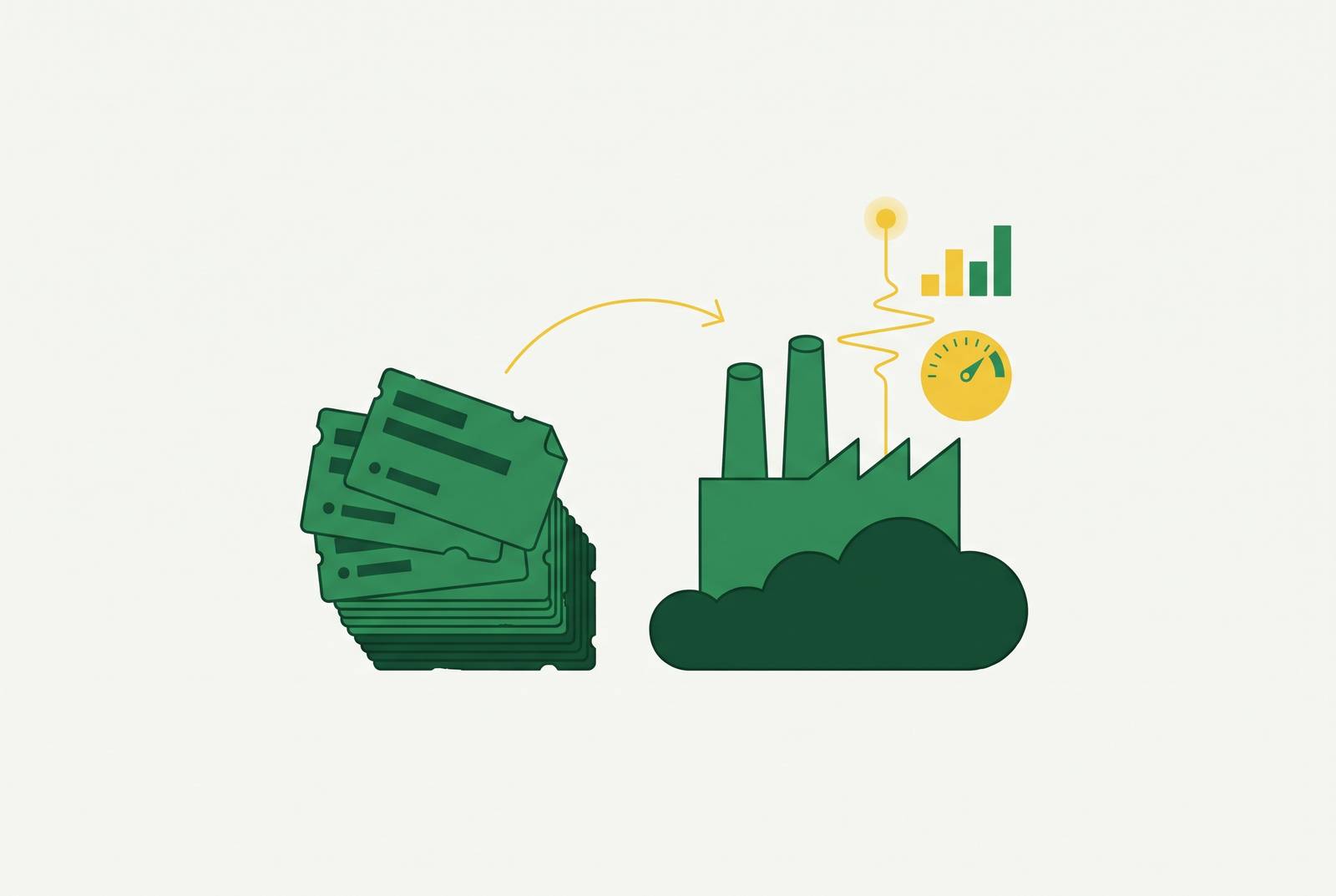
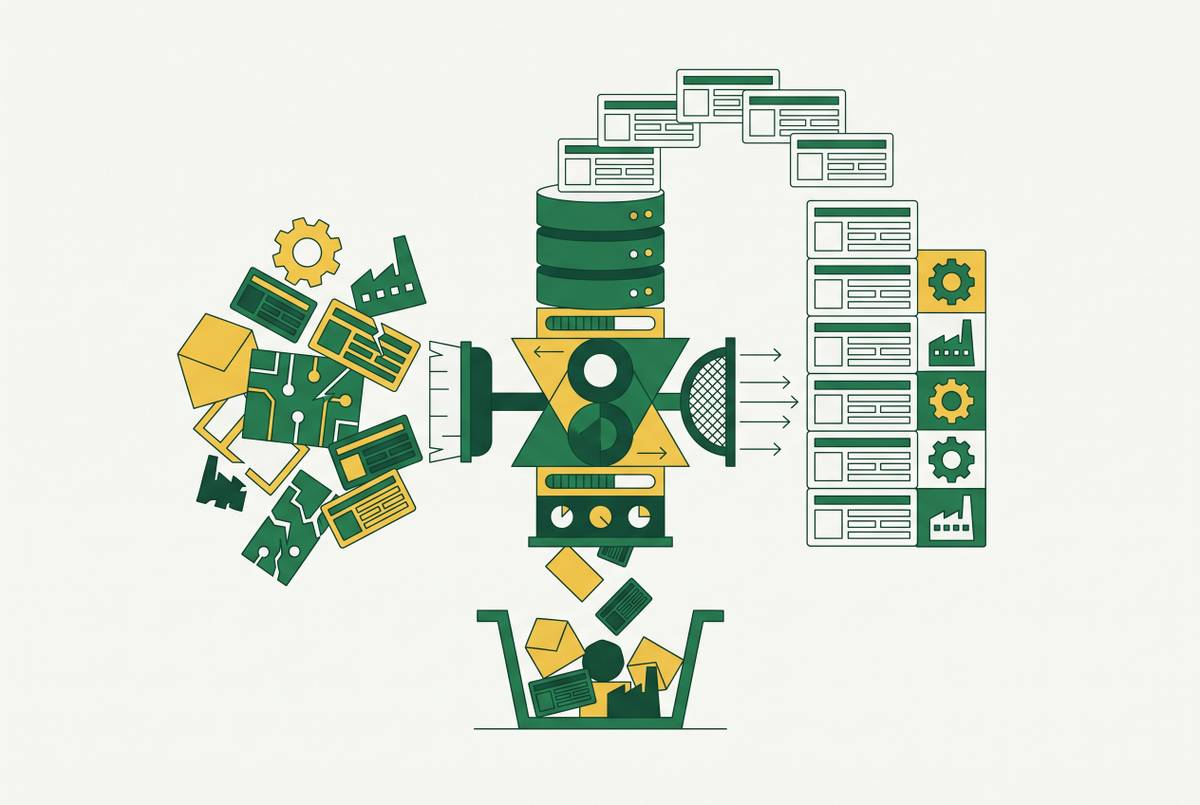
Salesforce and HubSpot enrichment with real manufacturing facility data means making live plant production profiles the primary sales descriptor. Profiles connect what a facility makes, runs, and buys to account routing and prioritization. Codes still help with administration, but industrial sales teams need up-to-date evidence of what each facility does.
Why SIC and NAICS codes were built for economic reporting, not sales targeting
Manufacturing accounts in Salesforce almost universally carry a SIC or NAICS code. That field identifies an economic category. SIC was developed in the 1930s and last updated in 1987, while NAICS replaced it for federal statistical programs in 1997 and is updated every five years. Neither system was designed to describe what happens inside a specific plant at a specific moment.
The classification logic groups businesses by production or demand characteristics, while sales teams need to distinguish facilities by their operations. A holding company, a sales office, and a production plant can all carry the same code in a business database. Codes assigned at incorporation are rarely revisited, and a code's continued presence on the classification list does not establish that it still describes the business. The UK Office for National Statistics found significant mismatches between registered SIC codes and companies' descriptions of their activity at the most detailed level, with notable mismatches even at the broader division level.
SIC and NAICS do not map one-to-one. A single SIC code can split into several NAICS codes, so databases with both have different ways to group accounts for segmentation. Even a current classification can therefore produce different account groups depending on which field a report queries. The code promises a consistent economic category, but the sales team needs a dependable account of production and purchasing requirements.
How a code that is technically correct can still be operationally useless for manufacturing sales
OSHA's SIC Manual defines SIC 34 as fabricated metal products, except machinery and transportation equipment. A sheet metal enclosure shop and a valve manufacturer can be in that group even though they have different buyers, quoting cycles, tolerances, and content needs. The classification does not distinguish the operational characteristics relevant to product fit or a rep's approach to the account.
A rep selling into either facility still needs to know what it makes and what equipment runs on its floor. That judgment is harder when the code for a parent company covers production plants, distribution centers, and sales offices that it owns, an entity-to-facility mismatch. Those locations have different purchasing profiles despite their shared ownership. Routing them as equivalent manufacturing prospects confuses corporate affiliation with demand.
Operational change creates a further blind spot. A plant can add CNC machining capacity, take on new aerospace subcontracts, or change ownership without changing its original code. The classification system has no trigger to update the code when those changes happen. For a rep, however, they may change the product fit, the opening for a supplier conversation, or the potential scope of an existing account.
What breaks inside Salesforce when industry codes are the primary account descriptor
A saved prospecting list inherits the limits of every field used to build it. When an ICP filter treats a manufacturing code as evidence of production activity, distributors, sales offices, and holding companies can pass the filter. An account score built on the same field reinforces that selection. The resulting contamination consumes rep time at scale. Adding headcount may describe the account's size, but it does not establish that the facility runs a process the seller can serve.
A territory report encounters a different version of the same problem. Code-based density maps show where businesses with those codes are, but they do not show where relevant production capacity is growing. Plants with new equipment, certifications, ownership, or end-market exposure remain indistinguishable if their code stays unchanged. Within an existing book, that also suppresses cross-sell and upsell signals. A rep looking at the account record cannot act on expanded production scope that the record does not describe.
Multi-plant groups compound the problem when plant activity is flattened into one code-tagged parent instead of represented through a parent account and child accounts for individual facilities. Pipeline segmentation then inherits the same loss of detail. Grouping opportunities by industry code cannot distinguish their underlying process fit when that information is absent from the account. Salesforce can identify who exists without giving the rep a sound basis for deciding who deserves the next call.
What a live plant production profile contains that a code cannot
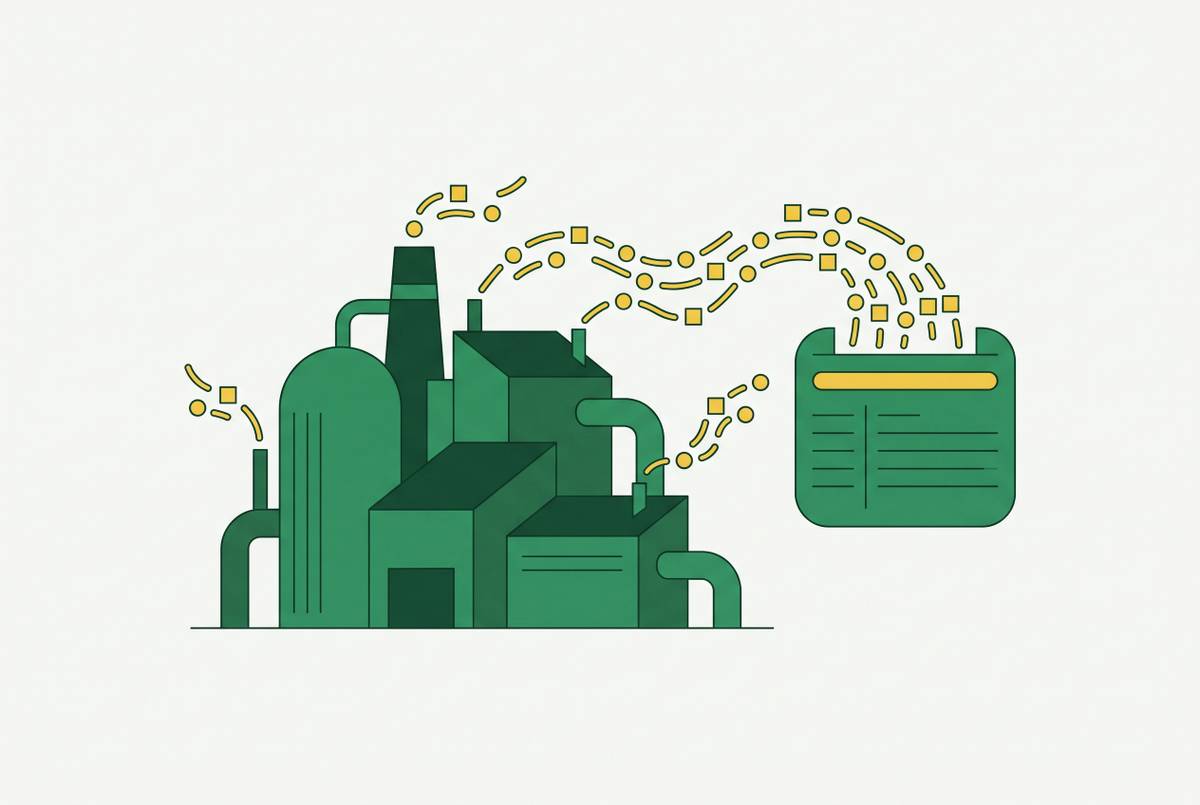
A live plant production profile describes observable operations. It contains what a facility makes, its equipment mix, its processes, and signals of its production trajectory. Those details connect the account to purchasing requirements before first contact. Documented five-axis CNC capacity, for example, signals different thermal and lubrication demands from three-axis work, with implications for metalworking fluid specification, volume, and replacement cycle.
Machining points to a need for metalworking fluids, surface finishing to a need for coating and adhesive, cooling towers to a need for water treatment, and packaging lines to a need for material inputs. Activity signals then add a timing dimension. Equipment permit filings, machinery additions, and new certifications indicate that a plant's operating profile is changing. Ownership transitions can also create openings as vendor relationships are audited and legacy supply agreements lapse.
FUCHS's July 2026 Boeing BAC 5008 approval for ECOCOOL GLOBAL 1000 illustrates how process intelligence turns a product event into an account-selection criterion. With the approval, reps selling that fluid had qualified accounts in the precision machining subcontractors in Boeing's supply chain. A code alone cannot identify that intersection. A process-level profile can connect the relevant machining operation with the supply-chain context, allowing the approval to inform targeting. Qualification here establishes a relevant product opportunity.
How replacing codes with profiles changes territory planning and account prioritization in practice
Territory planning with profiles starts with where the production operations that a seller can serve are. A sales leader can distinguish facilities by what they make and run, rather than count businesses sharing a NAICS code within a ZIP code or county. That changes the basis for assignment. Reps can cover facilities where their product line has a genuine process fit, while territory comparisons reflect differences in purchasing profiles and potential deal sizes. Geographic proximity remains useful, but it no longer substitutes for commercial relevance.
Account prioritization changes when current activity becomes visible in Salesforce. Instead of learning about a production change when a customer calls, the rep sees an equipment addition, permit filing, or certification change as a reason to investigate a buying window. The signal gives the call a purpose. It also makes prioritization less dependent on whether a rep happens to remember an old conversation. The account record supplies operational context at the point where the next outreach decision is made.
A process profile can show that an existing account running a surface finishing line has coating input requirements, without requiring the rep to reconstruct its operations from call notes. Across a large book, these distinctions guide both attention and exclusion. Facilities without a demonstrable process fit can receive less prospecting time, leaving more capacity for relevant accounts. The pipeline benefit compounds as those choices recur, provided the profile data remains connected to the Salesforce workflows that make them.
How do you replace SIC code fields with plant production data in Salesforce?
The replacement is primarily a data model decision. A purchased profile has limited operational value if Salesforce cannot query it, maintain it, or connect it to routing and scoring. The account hierarchy comes first because individual plants need distinct records, with activity and revenue rolled up to the parent. In an environment that represents a manufacturing group as one account, retrofitting that hierarchy is the first architectural step. Otherwise, richer data still lands at a level that obscures differences between facilities.
Field mapping follows from that choice of unit. Process types, equipment classes, certifications, and activity signals do not fit cleanly into a standard SIC or NAICS field. They require custom objects, additional standard fields, or an integrated data platform that writes to existing account records. Data that appears on an account but cannot support the relevant saved list, territory assignment, or account score has not replaced the code's role in decision-making.
Continuous refresh is the strongest objection to replacement. A profile accurate at onboarding becomes misleading when the facility adds a production line, changes ownership, or loses a certification. A one-time import is therefore insufficient. Codes also become stale, often without any indication that their relationship to the business has weakened. The profile layer earns its advantage only when changes in operational reality can reach the CRM.
SIC and NAICS retain legitimate uses in compliance reporting, public filing research, legacy system compatibility, and longitudinal benchmarking. They can remain available for those purposes while profiles become the primary sales-routing and prioritization layer. For continuous enrichment, an integrated platform needs to index plant-level data and write it to Salesforce accounts, or integrate natively with HubSpot or Dynamics 365. That connection removes the manual research burden that would otherwise make profile maintenance impractical across a distributed sales organization.
What sales teams in specialty chemicals, metalworking fluids, and adjacent verticals gain when Salesforce accounts carry plant profiles
For metalworking fluid sales, the process profile functions as a purchase specification. Machining operations, equipment mix, and production volumes give a rep a basis for proposing fluid class, volume, and service interval before the first call. An industry code cannot provide that preparation. The advantage comes from connecting the product's application to documented production requirements, so the opening conversation can address a relevant operating need.
Specialty chemicals and coatings give reps more ways to cross-sell. A facility that does surface preparation, finishing, and coating in sequence needs products from more than one product line. A single industry classification hides those needs inside one category, while a process profile exposes them as distinct opportunities. Whether a facility has a cooling tower and how its packaging line is set up tell reps which consumables those operations need, so they can base sales decisions on what the facility does.
For sales leaders overseeing distributed reps with hundreds or thousands of accounts each, the cumulative gain is time. Process signals that relate to a rep's products cut the research needed to learn whether an account fits and why now is a good time to talk. That benefit extends beyond finding new prospects. It also helps reps spot production changes in accounts they already serve without waiting for a customer to tell them. As Salesforce presents more of that knowledge at the point of decision, fewer prospecting hours go to poor-fit facilities and more go to conversations with a credible path to revenue.